Human control when play gets complex
The fastest way to ruin a live sports stream is deploying automated tracking without an effortless escape hatch. Keeping an operator in the loop turns brittle automation into dependable assisted production.
Why "hands-off" rarely stays hands-off
In live competition, non-gameplay events define half the broadcast story. Substitutions at the fourth official's board, tactical huddles during timeouts, medal presentations, injury stoppages, and penalty shootouts all break the normal movement patterns that sports tracking models are trained on.
When play stops for a two-minute injury treatment, an unsupervised tracker frequently wanders toward whichever cluster of players happens to jog in place near midfield—or tracks a ball boy tossing a spare ball along the touchline. Worse still, in sensitive moments involving medical staff on the pitch, broadcast ethics demand pulling back to a respectful wide stadium view rather than zooming onto the incident.
An operator-assisted model lets one producer monitor two or three cameras simultaneously, relying on automation for routine midfield tracking while stepping in immediately whenever context shifts.
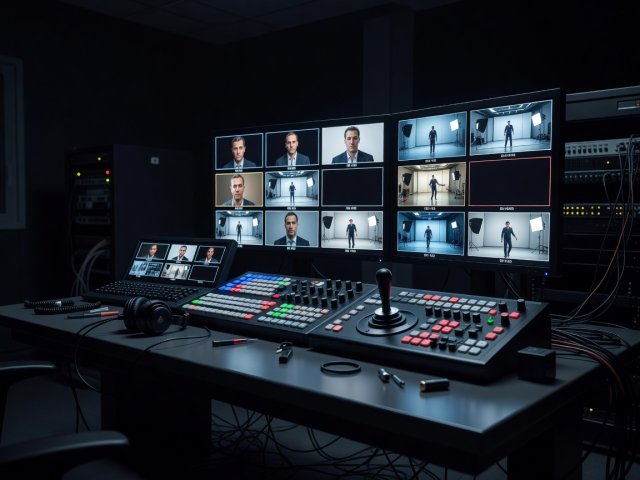
Four states of operator-to-AI control
Well-designed control desks eliminate mode-hunting by making transitions between automated tracking and manual steering instantaneous and visually obvious.
Tally awareness and preview protection
Nothing looks more amateur on air than a robotic camera visibly hunting back and forth while it is live on program. Every switcher-connected camera rig benefits from a two-way tally link (via GPIO, TSL UMD, or NDI tally metadata).
When a secondary PTZ camera sits in Preview rather than Program, the tracking engine can reacquire play aggressively or snap quickly to a bench preset. The instant that camera goes live on Program, control software should damp rapid re-centering sweeps and honor an explicit manual lock until the technical director cuts away.
On single-camera club streams where no cutaway camera exists, operators should pair automated tracking with a hardware joystick and a dedicated "Freeze / Wide Hold" footswitch or hotkey. Holding the wide shot during dead balls eliminates 80% of false-track embarrassment without requiring continuous manual panning.
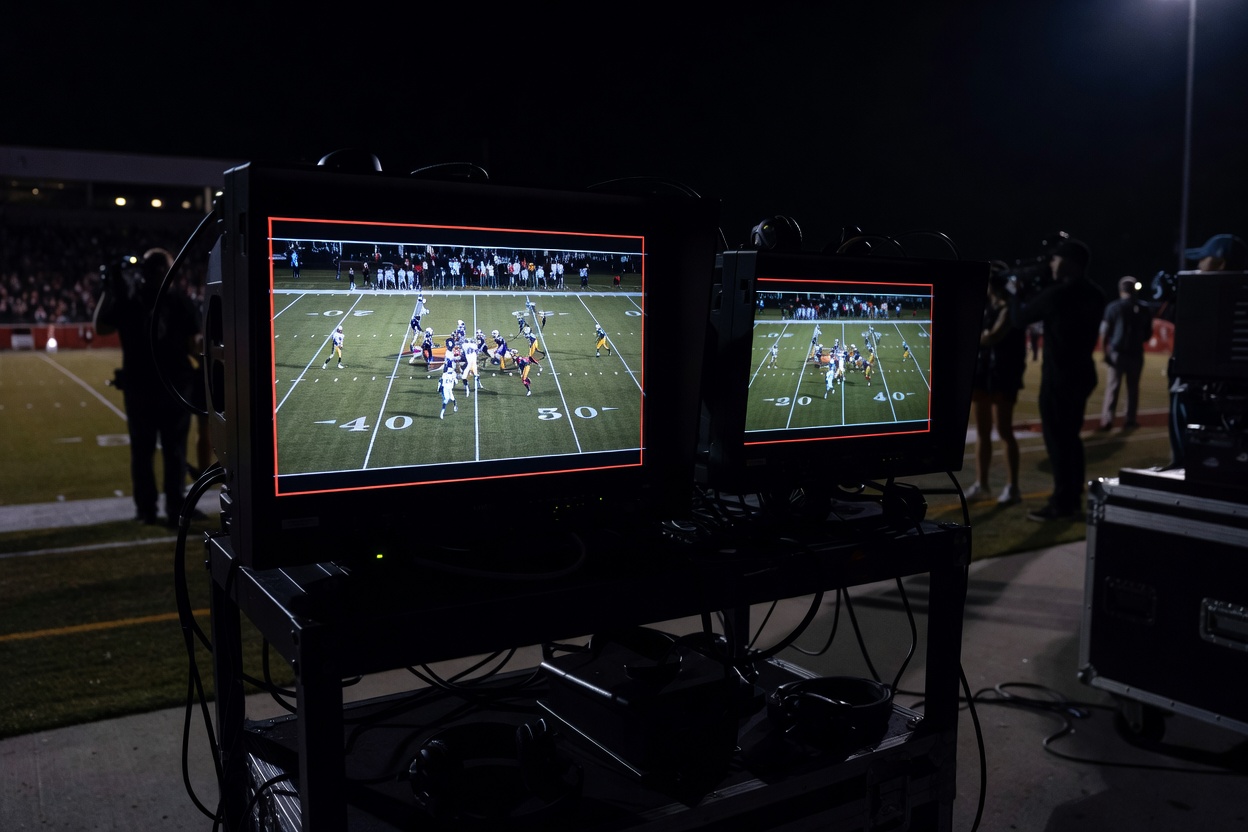
Never troubleshoot tracking parameters on air
If an automated controller misreads glare or chases an errant ball during a live match, switch immediately to Wide Hold or manual joystick control. Adjust confidence thresholds, dead-band width, or exclusion masks only at halftime or after the final whistle.
Next: Production Integration